Buy intrt.com ?
We are moving the project
intrt.com .
Are you interested in purchasing the domain
intrt.com ?
domain@kv-gmbh.de · 0541-91531010
Buy intrt.com ?
Can you ride a moped without a chain tensioner?
Yes, you can ride a moped without a chain tensioner, but it is not recommended. The chain tensioner helps to keep the chain at the proper tension, which is important for smooth and efficient operation of the moped. Without a chain tensioner, the chain may become loose or too tight, leading to potential damage to the chain, sprockets, and other components of the moped. It is best to ensure that the chain tensioner is properly installed and functioning before riding the moped. **
How does the chain tensioner work on the Puch Maxi?
The chain tensioner on the Puch Maxi works by using a spring-loaded mechanism to apply tension to the drive chain. It is typically located on the rear wheel axle and can be adjusted to ensure the proper tension of the chain. By turning the tensioner bolt, the tension on the chain can be increased or decreased, allowing for proper alignment and smooth operation of the chain. This helps to prevent the chain from slipping or coming off during operation. **

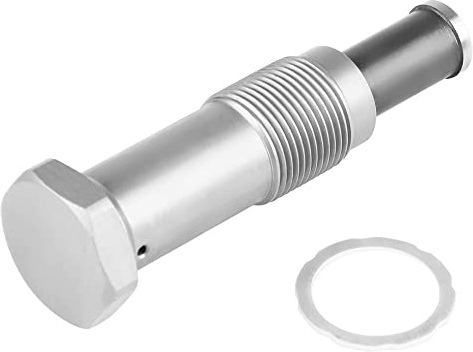
Similar search terms for FORCE-9G0809-Chain-Tensioner
Top-Angebote
Products related to FORCE-9G0809-Chain-Tensioner:




-
How do you easily change the chain tensioner on a bicycle?
To easily change the chain tensioner on a bicycle, start by loosening the bolts that secure the tensioner to the frame using the appropriate tools. Once the tensioner is loose, adjust the position of the tensioner to achieve the desired chain tension. Finally, tighten the bolts back up to secure the tensioner in place. It's important to make sure the tensioner is aligned properly with the chain to prevent any issues with shifting or chain slippage. **
-
How do you simply change the chain tensioner on a bicycle?
To change the chain tensioner on a bicycle, start by loosening the bolts that hold the tensioner in place. Then, remove the old tensioner and replace it with the new one, making sure it is positioned correctly. Finally, tighten the bolts to secure the new tensioner in place, and adjust the tension as needed to ensure the chain is properly tensioned. It's important to refer to the specific instructions for your bike's make and model, as the process may vary slightly. **
-
Where can I find a chain tensioner for a hub gear system?
You can find a chain tensioner for a hub gear system at most bike shops or online retailers that specialize in bicycle parts and accessories. Look for specific chain tensioners designed for hub gear systems to ensure compatibility with your bike. Additionally, some bike manufacturers or hub gear system brands may offer chain tensioners as part of their product line. **
-
How high is the pulling force in the chain?
The pulling force in a chain can vary depending on factors such as the type of chain, its size, and the material it is made of. Generally, the pulling force in a chain can range from a few hundred pounds to several thousand pounds. It is important to consider the working load limit and the breaking strength of the chain to ensure it is used within its safe operating limits. It is always recommended to consult the manufacturer's specifications and guidelines for the specific chain being used to determine its pulling force capabilities. **

What is the difference between torque and chain hoist force?
Torque is a measure of the rotational force applied to an object, while chain hoist force refers to the vertical lifting force exerted by a chain hoist. Torque is typically measured in units of force multiplied by distance (such as pound-feet or Newton-meters), while chain hoist force is measured in units of force (such as pounds or Newtons). Torque is used to describe the twisting force applied to a rotating object, while chain hoist force is used to describe the upward force exerted by a hoist to lift an object. **
Do you have to mount the ceiling tensioner?
Yes, the ceiling tensioner must be mounted in order to properly install and use it. The tensioner is designed to be mounted securely to the ceiling in order to provide the necessary support and tension for the suspended object or structure. Mounting the tensioner ensures that it is stable and able to hold the weight it is intended for, providing a safe and reliable installation. It is important to follow the manufacturer's instructions for mounting the ceiling tensioner to ensure proper installation and functionality. **
Top-Angebote
Products related to FORCE-9G0809-Chain-Tensioner:
-
LASER TOOLS 5153 Chain Tensioner, timing chainMaterial: Steel; Colour: black; Number of Parts [parts]: 2; for OE number: 11 9 340; Manufactured in: Great Britain; only for article number: For Laser 5148&5149; TecDoc Engine Number: 20893, 24546, 25562, 34865, 24547, 2556339,49 £*Shipping: 0,00 £Secure redirect to the provider
-
Can you ride a moped without a chain tensioner?
Yes, you can ride a moped without a chain tensioner, but it is not recommended. The chain tensioner helps to keep the chain at the proper tension, which is important for smooth and efficient operation of the moped. Without a chain tensioner, the chain may become loose or too tight, leading to potential damage to the chain, sprockets, and other components of the moped. It is best to ensure that the chain tensioner is properly installed and functioning before riding the moped. **
-
How does the chain tensioner work on the Puch Maxi?
The chain tensioner on the Puch Maxi works by using a spring-loaded mechanism to apply tension to the drive chain. It is typically located on the rear wheel axle and can be adjusted to ensure the proper tension of the chain. By turning the tensioner bolt, the tension on the chain can be increased or decreased, allowing for proper alignment and smooth operation of the chain. This helps to prevent the chain from slipping or coming off during operation. **
-
How do you easily change the chain tensioner on a bicycle?
To easily change the chain tensioner on a bicycle, start by loosening the bolts that secure the tensioner to the frame using the appropriate tools. Once the tensioner is loose, adjust the position of the tensioner to achieve the desired chain tension. Finally, tighten the bolts back up to secure the tensioner in place. It's important to make sure the tensioner is aligned properly with the chain to prevent any issues with shifting or chain slippage. **
-
How do you simply change the chain tensioner on a bicycle?
To change the chain tensioner on a bicycle, start by loosening the bolts that hold the tensioner in place. Then, remove the old tensioner and replace it with the new one, making sure it is positioned correctly. Finally, tighten the bolts to secure the new tensioner in place, and adjust the tension as needed to ensure the chain is properly tensioned. It's important to refer to the specific instructions for your bike's make and model, as the process may vary slightly. **
Similar search terms for FORCE-9G0809-Chain-Tensioner
-
Where can I find a chain tensioner for a hub gear system?
You can find a chain tensioner for a hub gear system at most bike shops or online retailers that specialize in bicycle parts and accessories. Look for specific chain tensioners designed for hub gear systems to ensure compatibility with your bike. Additionally, some bike manufacturers or hub gear system brands may offer chain tensioners as part of their product line. **
-
How high is the pulling force in the chain?
The pulling force in a chain can vary depending on factors such as the type of chain, its size, and the material it is made of. Generally, the pulling force in a chain can range from a few hundred pounds to several thousand pounds. It is important to consider the working load limit and the breaking strength of the chain to ensure it is used within its safe operating limits. It is always recommended to consult the manufacturer's specifications and guidelines for the specific chain being used to determine its pulling force capabilities. **
-
What is the difference between torque and chain hoist force?
Torque is a measure of the rotational force applied to an object, while chain hoist force refers to the vertical lifting force exerted by a chain hoist. Torque is typically measured in units of force multiplied by distance (such as pound-feet or Newton-meters), while chain hoist force is measured in units of force (such as pounds or Newtons). Torque is used to describe the twisting force applied to a rotating object, while chain hoist force is used to describe the upward force exerted by a hoist to lift an object. **
-
Do you have to mount the ceiling tensioner?
Yes, the ceiling tensioner must be mounted in order to properly install and use it. The tensioner is designed to be mounted securely to the ceiling in order to provide the necessary support and tension for the suspended object or structure. Mounting the tensioner ensures that it is stable and able to hold the weight it is intended for, providing a safe and reliable installation. It is important to follow the manufacturer's instructions for mounting the ceiling tensioner to ensure proper installation and functionality. **
* All prices are inclusive of VAT and, if applicable, plus shipping costs. The offer information is based on the details provided by the respective shop and is updated through automated processes. Real-time updates do not occur, so deviations can occur in individual cases. ** Note: Parts of this content were created by AI.